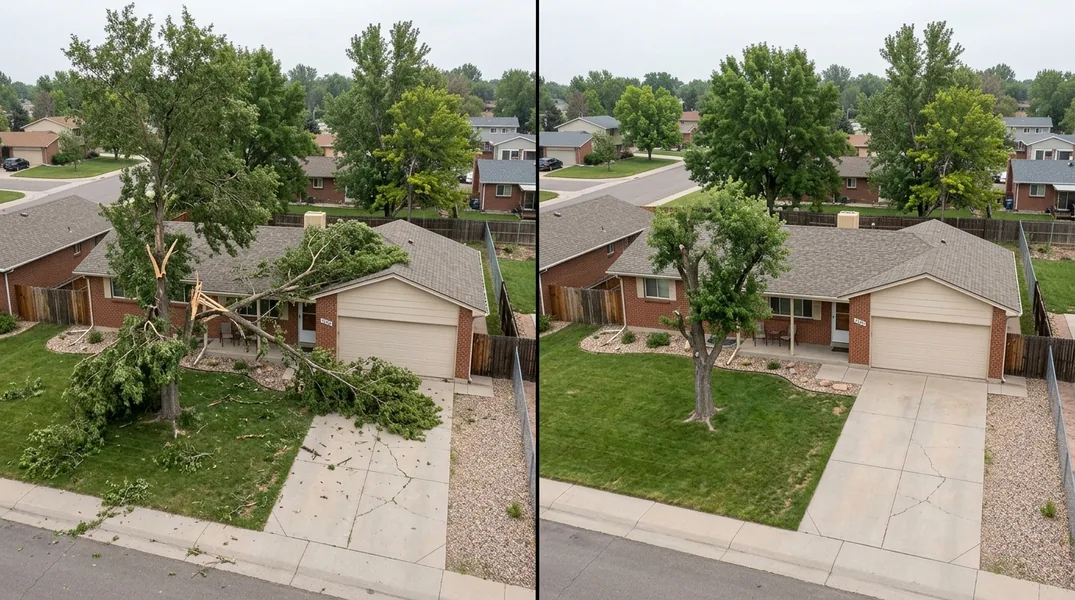
Understanding Wet Spring Snow Damage on the Front Range
The Front Range experiences a unique weather pattern that catches many homeowners off guard: wet spring snow. Unlike the dry powder that falls in winter, spring snow is heavy, moisture-laden, and clings aggressively to branches and foliage. This combination creates dangerous conditions for trees across Aurora and the surrounding region.
When temperatures hover near freezing and snow accumulates on leaf-bearing branches, the weight becomes extraordinary. A single inch of wet snow can add hundreds of pounds of load to a mature tree's canopy. Trees that have already leafed out in spring are especially vulnerable because their branches are full and catch more snow. The result is often catastrophic: major limbs snap under the pressure, trunks split, and entire trees can topple. This type of damage is particularly common in late April and early May when trees have already broken dormancy.
The problem intensifies if your trees are already stressed, weakened by disease, or structurally compromised. A tree with poor branch angles, included bark, or a history of storm damage faces exponentially higher risk. Understanding this seasonal threat is the first step toward protecting your property and your family from the dangers of wet snow tree damage in Denver and surrounding communities.
Why Certain Species Like Honeylocust Are Prone to Failure
Not all trees respond equally to wet spring snow. Some species have evolved strong, upright branching habits and dense wood that resists breaking. Others have inherent structural weaknesses that make them disaster-prone during heavy snow events. Honeylocust trees, which are common ornamental and shade trees throughout the Front Range, are particularly susceptible to failure during wet snow storms.
Honeylocust trees develop wide, spreading branch angles and relatively weak wood that cannot support the sudden weight of accumulated snow. Their fine, compound foliage catches and holds snow exceptionally well, multiplying the load on already vulnerable limbs. Additionally, honeylocust trees often develop multiple leaders or co-dominant stems that share bark inclusion, a structural defect that severely compromises strength. When wet snow adds hundreds of pounds to these weak points, failure is almost inevitable. Homeowners who have honeylocust trees in their yards are at particularly high risk of experiencing significant damage during spring storms.
Other species that commonly fail under wet snow include cottonwoods, boxelders, and willows. These fast-growing trees prioritize rapid height gain over structural strength, resulting in weak wood and poor branch attachment. If you have any of these species on your property in Aurora, taking preventive action now could save you thousands in emergency repairs or tree removal costs later.
Preventive Tree Trimming Colorado Homeowners Should Do Before Spring
Tree Trimming & Pruning is your most effective defense against spring snow damage. Strategic pruning removes weak branches, reduces canopy weight, and improves the tree's ability to shed snow naturally. The key is timing and technique. Late winter into early spring, before trees fully leaf out, is the ideal window for this preventive work. At this stage, you can see the tree's structure clearly and make cuts that will have maximum impact on storm resilience.
Proper preventive trimming focuses on removing branches that exhibit structural weakness. This includes limbs with narrow angles of attachment (less than 45 degrees), branches with included bark, crossing limbs that compete for space, and any deadwood that adds weight without strength. A certified arborist will also thin the canopy by removing interior branches, which allows snow to fall through rather than accumulate on the crown. This thinning approach reduces wind resistance and snow load simultaneously, making the tree far more likely to survive a heavy spring storm intact.
Many homeowners make the mistake of waiting until after a storm to call for help. By that time, damage has already occurred, and you may need Tree Removal or expensive emergency repairs. The cost of preventive trimming is a fraction of what you will pay for storm damage cleanup or tree replacement. If you are unsure whether your trees need attention, contact Aurora Tree Service at (719) 284-7635 to schedule a free estimate. Our arborists can assess your trees and recommend the most cost-effective protection strategy.
Spring Snow Limb Breakage: Recognizing Risk and Taking Action
Spring snow limb breakage occurs suddenly and without warning, but the conditions that make it likely are often visible to a trained eye. Trees with dense, heavy canopies, poor branching structure, or existing damage are prime candidates for failure. If you notice branches that are already cracked, split, or hanging at odd angles, those are red flags that the tree is structurally compromised and at high risk during the next wet snow event.
Another sign of risk is the presence of multiple large branches originating from nearly the same point on the trunk, creating a weak crotch. Trees that have been topped (cut flat across the crown) also develop numerous weak sprouts that snap easily under load. If your property has experienced previous storm damage, the tree may have healed poorly and left internal defects that weaken it for future storms. A professional arborist can identify these hidden vulnerabilities that homeowners typically cannot see.
Taking action before spring snow arrives is critical. Even a few days of preventive work can mean the difference between a tree that survives the storm intact and one that suffers catastrophic failure. The window for this work is narrow, typically late February through early April before the heaviest spring snows and full leaf-out occur. If you delay until May or June, you have missed the optimal timing and will need to wait until the following year to reduce risk.
Emergency Tree Service Near Me: What to Do After Storm Damage
Despite your best preventive efforts, spring storms sometimes cause damage that requires immediate professional response. Broken branches hanging from trees, split trunks, and uprooted trees all pose safety hazards to your home, vehicles, and family. If a tree has failed or a large branch has broken, do not attempt to remove it yourself. Broken trees are unstable, and chainsaw work at height is extremely dangerous without proper equipment and training.
Emergency Tree Service should be your first call after a storm. Aurora Tree Service responds quickly to storm damage and can safely remove broken limbs, fell damaged trees, and clear debris from your property. We have the equipment, insurance, and expertise to handle dangerous situations that homeowners cannot safely address alone. Our team works efficiently to restore safety and access to your yard while minimizing additional damage to surrounding landscape.
After emergency cleanup is complete, do not assume the danger has passed. Trees that have suffered major branch loss may have internal injuries that compromise their long-term health. Some trees recover well from storm damage, while others decline and eventually die. A professional assessment can help you decide whether to invest in recovery pruning or proceed with Tree Removal and Stump Grinding. Call Aurora Tree Service at (719) 284-7635 for immediate assistance with storm damage or to schedule a consultation about your tree's recovery options.
Creating Your Storm-Proofing Plan: Next Steps for Aurora Homeowners
The best time to address wet snow risk is now, before the next spring storm arrives. Start by walking your property and identifying trees that concern you. Look for species known to fail (honeylocust, cottonwood, boxelder), trees with poor structure or previous damage, and any limbs that already appear weak or cracked. Make a list and prioritize the trees closest to your home, garage, or areas where family members spend time.
Next, contact a certified arborist to evaluate your trees and recommend specific pruning work. This professional assessment is far more valuable than general advice because it accounts for your specific trees, your property layout, and local weather patterns. An arborist can explain exactly why a particular tree is at risk and what pruning will reduce that risk most effectively. Many companies, including Aurora Tree Service, offer free consultations and estimates so you can understand the scope and cost of work before committing.
Once you have a plan, schedule the work during the optimal window: late winter into early spring. Waiting until late spring or summer means missing the best timing and accepting higher risk through the following winter and spring. The investment in preventive pruning and professional assessment is far smaller than the cost of emergency tree removal, home repairs from fallen limbs, or replacement of a mature tree. Protect your property, your family, and your trees by taking action today. Contact Aurora Tree Service at (719) 284-7635 or request a free estimate to begin your storm-proofing plan.
Looking for a professional tree service in Aurora? Aurora Tree Service responds fast for all your tree service needs.
Get a Free QuoteOur services: Tree Removal · Tree Trimming & Pruning · Stump Grinding